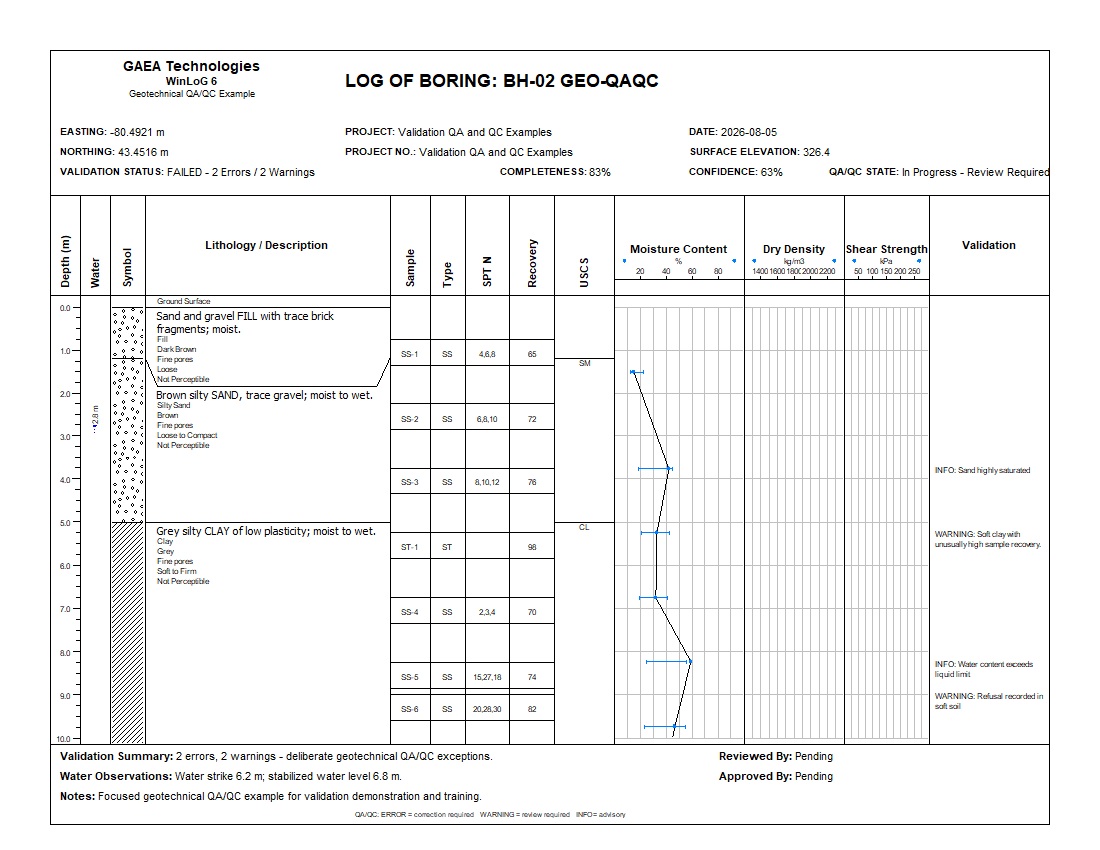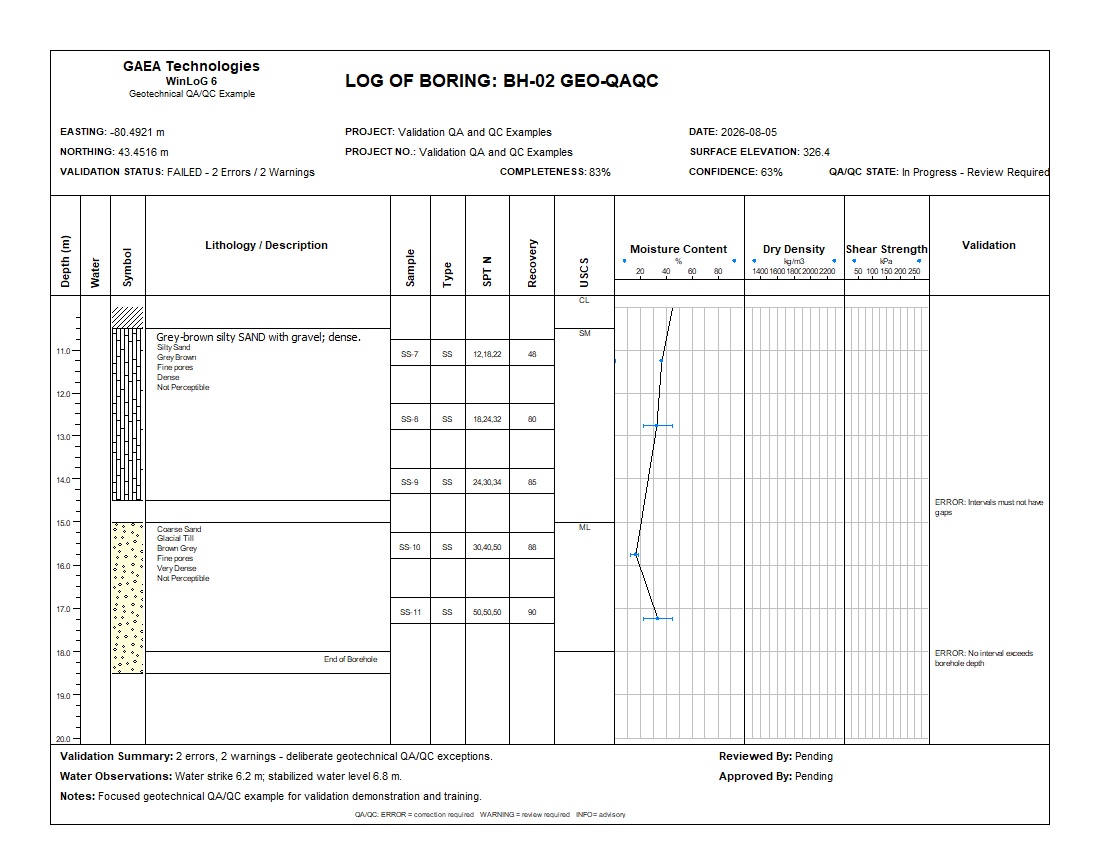

This example shows how WinLoG applies automated QA/QC to a conventional geotechnical investigation. BH-02 GEO-QAQC combines lithology, sampling, SPT N-values, sample recovery, USCS classification, groundwater observations, water content and Atterberg Limits, dry density, and shear strength in a single professional borehole log.
The borehole intentionally contains selected data-quality issues so WinLoG can demonstrate domain checks, cross-dataset consistency checks, completeness checks, and geotechnical engineering review conditions without the additional rock-core datasets used in the flagship Validation & QA/QC Showcase.
The example contains deliberate geotechnical exceptions rather than only idealized data. These include water content values that exceed the corresponding liquid limit, an unusual recovery relationship in soft clay, lithology intervals with gaps, and a highly saturated sand that should be reviewed relative to the recorded groundwater level.
The sample XML is configured with 2 errors and 2 warnings so the borehole log and validation report demonstrate how WinLoG identifies, documents, and communicates conditions requiring correction or engineering review.
Download the example files individually. The XML template and log can be imported into WinLoG Version 6 and customized for company-specific geotechnical workflows.
Demonstrates a practical soil-boring workflow with SPT, classification, groundwater, laboratory results, and automated QA/QC.
Useful for building, transportation, municipal, foundation, and other infrastructure investigations where repeatable validation is important.
Shows how field and laboratory information can be checked together before borehole records are reviewed, approved, or issued.
WinLoG templates can be customized to match company standards, project requirements, and agency formats. Validation rules can also be tailored to company QA/QC procedures, client requirements, and future agency-specific rule libraries.
Contact GAEA Technologies
GAEA Technologies develops and distributes geoscience and engineering solutions worldwide. Our solutions have been used for over 30 years by companies and organizations around the world.
© 2026 - All Rights Reserved/span>